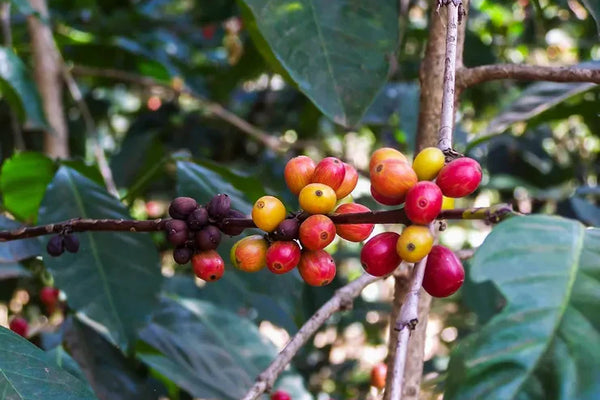
Coffee was born in Ethiopia. Not discovered there born there. And after thousands of years, the world is still chasing what Ethiopia naturally produces.
1. Ethiopia Is Where Coffee Began
The story of coffee starts in the highlands of Ethiopia specifically in a region called Kaffa, where the Coffea arabica plant grew wild for centuries before anyone thought to brew it. Legend traces it to a goat herder named Kaldi who noticed his goats dancing after eating red berries off a particular tree. Whether the story is myth or memory, the geography is fact: Ethiopia is the genetic birthplace of arabica coffee. Every single arabica bean grown anywhere in the world Brazil, Colombia, Vietnam, Yemen traces its DNA back to Ethiopian soil.
That origin matters. Wild coffee still grows in Ethiopia's forests. No other country on earth has that. Ethiopian farmers aren't growing a crop that was imported and adapted they are cultivating coffee in the very ecosystem it evolved in. The result is a complexity and depth that simply cannot be replicated elsewhere.
2. Unmatched Genetic Diversity
Most coffee growing countries work with a handful of cultivated varieties often just one or two. Ethiopia has thousands. Estimates suggest there are over 10,000 distinct coffee varieties growing in Ethiopia, many of them still unnamed and unstudied. This genetic richness is why Ethiopian coffee tastes like no other coffee in the world.
In Yirgacheffe, that diversity expresses itself as bright floral notes, bergamot, jasmine, and a clean citrus acidity that coffee drinkers describe as almost tea-like. In Sidamo, it shows up as full-bodied richness with stone fruit, chocolate undertones, and a long sweet finish. These aren't the result of roasting technique or processing tricks they are the natural flavor of the beans themselves.
3. The Terroir Is Exceptional
Ethiopia's coffee-growing regions sit between 1,500 and 2,200 meters above sea level. At that altitude, coffee cherries ripen slowly. Slow ripening means more time for sugars and flavor compounds to develop inside the bean. The result is a denser, more complex bean than you get from lower altitude farms.
The climate reinforces this. Ethiopian growing regions receive rainfall in distinct cycles, with dry seasons that concentrate the cherry's sugars before harvest. The soil in places like Yirgacheffe is rich, well-drained, and mineral-dense conditions that are nearly impossible to engineer artificially. This combination of altitude, rainfall pattern, and soil composition is what coffee professionals call terroir. Ethiopia's terroir is, by most expert consensus, the finest coffee terroir on the planet.
4. The Coffee Culture Is 1,000 Years Deep
In Ethiopia, coffee isn't a morning habit it's a ceremony. The Ethiopian coffee ceremony, known as the Buna ceremony, is one of the most important cultural rituals in the country. Green coffee beans are roasted fresh over charcoal, hand ground with a mortar and pestle, brewed in a clay pot called a jebena, and served across three rounds each with its own name: abol, tona, and baraka. The third cup is said to carry a blessing.
This culture has shaped how Ethiopian coffee is produced, selected, and treated. Coffee in Ethiopia is not just an agricultural commodity it is a source of national identity and pride. That relationship between people and plant, maintained over centuries, produces coffee that carries something no amount of modern farming technique can manufacture: soul.
5. Small Farms, High Standards
The majority of Ethiopian coffee comes from smallholder farms families tending plots of a few acres, often alongside food crops, in the traditional intercropping style that has existed for generations. These are not industrial operations. They are intimate, careful, and deeply personal.
Because Ethiopian farmers typically handpick only ripe cherries rather than strip harvesting entire branches, the selectivity built into the harvest process is exceptional. A single pick